Air Conditioner Repair & Maintenance in Butler, PA & Armstrong County
If you’re in the peak of summer, suffering day after day of high temps and/or high humidity levels, then the last thing you want is for your air conditioning to shut down. Fortunately for Armstrong County home and business owners, we’re here to help with air conditioner and cooling repairs and service near you.
We also offer 24/7 emergency HVAC care, ensuring you’re not left without A/C relief when you need it the most. For all things cooling, we’re the team to rely on.
Do I Need Annual A/C Services & Tune-Ups?
Now, if your air conditioner breaks down, we’re happy to lend a hand with some A/C repair services. That said, wouldn’t it be better to avoid this situation in the first place? We think so.
That’s why we suggest annual servicing, and offer tune-ups and regular maintenance to ensure any problem areas or concerns are addressed long before they shut your unit down completely.
If you sign up for a maintenance plan with us, rest assured you won’t miss a tune-up ever. During these overviews, we’ll ensure your evaporator coils, electrical components, safety components, motors, and more are all in working order. We’ll also check your refrigerant levels, inspect the system exterior for damage and wear, and clean the outdoor condenser coil.
And that’s not even the full list of things in our tune-up checklist! There’s a lot that goes into these services, but rest assured, we won’t miss a thing.
What Are the Most Common Air Conditioner Repairs?
What are some of the more common issues or concerns we come across in terms of A/C damages or malfunctioning:
- Excessive or strange noises from the unit
- Leaking refrigerant
- An increase in cooling bills
- Warm air coming from the vents
- Thermostat malfunctions
- Issues with the blower
- Mold or mildew buildup
- High humidity levels
- Inconsistent temperatures
- Unpleasant odors
- Indoor air quality concerns
- …and more!
If you are experiencing any of these issues, or if you have any other concerns that you think may be A/C related, don’t hesitate to give us a call.
Why Is My AC Running But Not Blowing Cold Air?
When your air conditioner runs but fails to cool the house, the system is essentially working twice as hard for zero reward. This issue usually breaks down into two categories: a simple airflow bottleneck that you can fix yourself, or a mechanical failure that requires a technician.
- Thermostat Settings: It sounds simple, but check this first. Ensure your thermostat is set to “Cool” and the fan setting is on “Auto” rather than “On.” When the fan is set to “On,” the system blows air continuously even when the AC compressor isn’t actively cooling it, resulting in lukewarm air coming from your vents.
- Clogged Air Filter: A heavily blocked filter restricts the volume of air flowing over your indoor evaporator coil. Without enough warm house air passing over it, the coil drops below freezing, causing the condensation on it to turn to ice. Once the coil freezes solid, it physically blocks any air from being cooled.
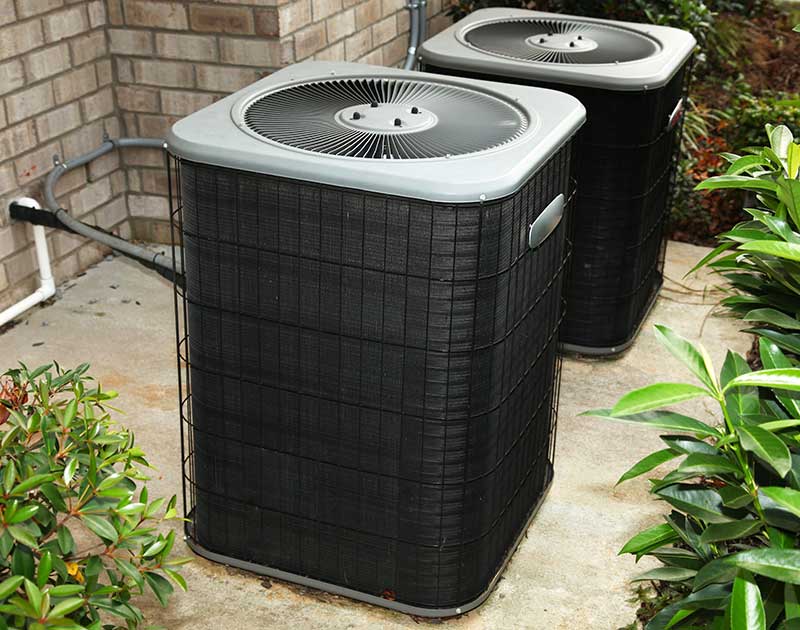
- Dirty Outdoor Condenser Unit: Your outdoor unit is responsible for releasing the heat collected from inside your home. If the metal fins are choked with grass clippings, dirt, leaves, or cottonwood, the unit cannot shed that heat. The system will keep drawing power and running, but it won’t be able to drop the indoor temperature.
- Low Refrigerant or Leaks: Refrigerant is the chemical fluid that absorbs and transfers heat. If your system is low on refrigerant, it means there is a leak somewhere in the copper lines. Without the proper amount of refrigerant, the system loses its capacity to cool the air passing over it.
- Failed Capacitor or Compressor: The outdoor unit relies on a capacitor (essentially a heavy-duty battery) to kickstart the compressor, which pumps the refrigerant. If the capacitor blows or the compressor itself fails, the indoor fan will still blow air, but the outdoor cooling cycle never actually starts.
Should I Repair My Old AC Unit or Just Replace It?
Deciding whether to patch up an aging system or bite the bullet on a new one comes down to assessing age, cost, and frequency of breakdowns. While a repair is cheaper upfront, constantly sinking money into a failing system is a classic “sunken cost” trap.
To make an objective choice, industry experts rely on a couple of simple rules of thumb:
- The $5,000 Rule: A reliable mathematical framework is to multiply the age of your AC system by the cost of the estimated repair. If the result is greater than $5,000, a replacement is typically the more financially sound decision. For example, a $600 repair on an 8-year-old system equals $4,800 (Repair). However, a $600 repair on a 12-year-old system equals $7,200 (Replace).
- The 10-to-15 Year Lifespan: Modern residential central air conditioners are built to last roughly 10 to 15 years. If your system is pushing past its 12th birthday and experiences a major component failure—like a cracked evaporator coil or a dead compressor—investing in a new unit is almost always wiser than repairing a machine nearing the end of its natural life.
- Frequency of Breakdowns: If you have had to call an HVAC technician more than twice in the last two years for unexpected repairs, your system is signaling its upcoming retirement. Those individual $300 service calls add up quickly and could instead serve as a down payment on a reliable new unit.
- Refrigerant Type (R-22 vs. R-410A): If your air conditioner was built before 2010, it likely uses R-22 refrigerant (commonly known as Freon). Because R-22 has been phased out entirely due to environmental regulations, sourcing it for a leak repair is incredibly expensive. If an older R-22 system develops a refrigerant leak, it is almost always time to replace it.
- Energy Efficiency Gains: Older systems typically carry a SEER (Seasonal Energy Efficiency Ratio) rating of 10 to 13. Modern baseline units start at 13.4 to 14.3 SEER2, and high-efficiency models can exceed 20 SEER2. Upgrading an old unit can slash your monthly cooling bills by 20% to 40%, helping the new system pay for itself over time.
How Often Should I Change My Home’s Air Filter?
The standard textbook answer is “every 90 days,” but air filter lifespans aren’t one-size-fits-all. How often you need to swap yours out depends entirely on the thickness of the filter, who lives in your house, and how hard your system is working.
Regularly changing your filter is the single cheapest way to prevent expensive compressor failures and keep your energy bills low.
- Filter Thickness and Style: Standard 1-inch pleated filters need to be changed every 60 to 90 days. Cheap fiberglass “see-through” filters offer very little protection and should be replaced every 30 days. If your home uses a thick, media filter cabinet (typically 4 to 5 inches thick), those are engineered to last anywhere from 6 months to a full year before requiring a swap.
- Pets and Shedding: Fur, dander, and outdoor debris brought in by pets will clog a filter significantly faster than normal. If you have one dog or cat, plan to change a standard 1-inch filter every 60 days. If you have multiple pets, you should check the filter every month and change it at least every 30 to 45 days.
- Allergies and Respiratory Conditions: If anyone in your household suffers from asthma, severe seasonal allergies, or chronic respiratory illnesses, your filter needs to be pristine to maintain high indoor air quality. In these cases, it is best to use a high-quality pleated filter and change it every 30 to 45 days regardless of pet status.
- Seasonality and Usage: Your filter only collects dust and debris when air is actively moving through the ductwork. During mild spring and autumn months when your HVAC system sits idle, filters last much longer. Conversely, during the peak of summer or dead of winter when the system runs around the clock, filters clog up twice as fast and require tighter maintenance schedules.
How Can I Prevent Air Conditioner Damage & Breakdowns?
Preventing air conditioner damage and breakdowns starts with consistent maintenance and mindful use. One of the best ways to avoid costly repairs is to schedule professional tune-ups at least once a year – ideally before summer begins. During these visits, technicians clean coils, check refrigerant levels, inspect electrical connections, and ensure all components are running efficiently.
In addition to professional care, you can take several steps at home to keep your system in top shape:
- Change air filters regularly (every 1–3 months) to maintain proper airflow and reduce strain on the unit.
- Keep the outdoor condenser clear of leaves, grass, and debris so air can circulate freely.
- Check and seal ducts to prevent cool air from escaping and forcing the system to work harder.
- Listen for unusual noises or look out for changes in cooling performance that might signal a developing problem.
- Use ceiling fans and window coverings to reduce the workload on your AC during hot days.
- Avoid setting the thermostat too low, which can cause the system to run continuously and wear out faster.
By combining regular maintenance with smart daily habits, you can extend your air conditioner’s lifespan, save on energy costs, and enjoy reliable comfort all season long.
What Is an Inverter Air Conditioner? Do Inverter Air Conditioners Help Conserve Energy?
An inverter air conditioner uses a variable-speed compressor that automatically adjusts its power to maintain the desired temperature efficiently. With inverter air conditioners, your compressor operates constantly and consistently, adjusting its speed based on the current temperature in your home.
This results in energy savings, less electricity used, and less noise overall. How does that work out? Because these systems don’t turn on and off all day, it means they won’t waste all that energy firing back up to get your home as cool as you need it to be.
All in all, these systems are great for those looking to cool their home more efficiently and saving on monthly energy costs.
Call Us Out Today
Whether you need your current system repaired, a new system installed, or just some basic maintenance completed before the start of the hot summer season, we’re here and ready for your call. Reach out now, so we can offer the best care available.
Dial our number to schedule or reach out online today.
Ask our trained techs if a ductless mini-split system could be the right solution for your cooling requirements.